Sound Attenuation Through Masks

A PDF to the full paper is available by clicking the PDF button to the right
The COVID-19 pandemic has had drastic effects on the lives of many human beings internationally; there are now enforced protocols declared by the government and state that people must follow in order to keep their loved ones and people around them safe. One of these enforced protocols involves wearing a face mask in a public setting. The most popular complaint when wearing a face mask is the miscommunication that comes along with it. Is there an actual effect on communication, and if so, do the frequencies that humans speak at change this effect?
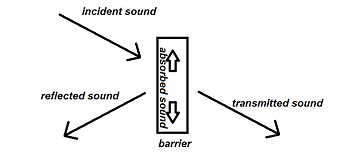
The goal of this experiment is to investigate if there is a change in the energy of the sound waves leaving our mouths when wearing a mask and not wearing a mask, and whether or not the pitch that a human speaks at has an effect on this. A phone was used to record the sound that a passive buzzer made, both with a mask on the buzzer, and without a mask on the buzzer, as it mimicked the range of frequencies that the average human speaks at.
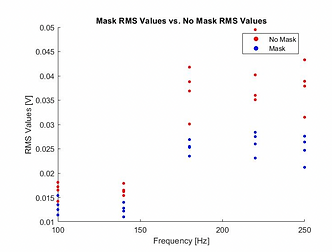
The RMS of the voltages from the observed sound waves would be taken in order to compare the amplitudes for each frequency’s trials. A two tailed hypothesis test was used in order to determine if there was a significant statistical difference between the data sets, and there was. It was concluded with 95% confidence that there is a noticeable difference between the amplitudes for the mask and no mask scenarios.
A linear regression could then be applied to the RMS values in order to observe the direct correlation pitch has on the amount of energy a sound wave retains after traveling through the barrier. This direct correlation implies that as the frequencies increase, the amount of energy lost throughout the propagation of the mask increases as well.
From our data, we can say with 95% confidence that the sound emitted through a mask is quieter than the sound emitted without the presence of a mask, at all frequencies of common human speech. This is proven from the results of our two tailed hypothesis test on the average RMS values of samples with the mask versus without the mask at all frequencies.
We can then say that when the frequency of the sound wave propagating throughout the mask increases, the percent lost of sound energy is increased. Thus, as the frequency of the sound wave increases, the noise becomes increasingly dampened as it passes through the mask. This is best shown through the trajectory of the linear regression of the data that compares frequency to the percent of the sound lost when we compare waves through a mask and through no mask. We can see in the confidence bounds that the entire region has the same trajectory as the linear regression. We therefore were able to successfully provide evidence for our hypothesis that the lower frequencies are more successful at penetrating the mask.